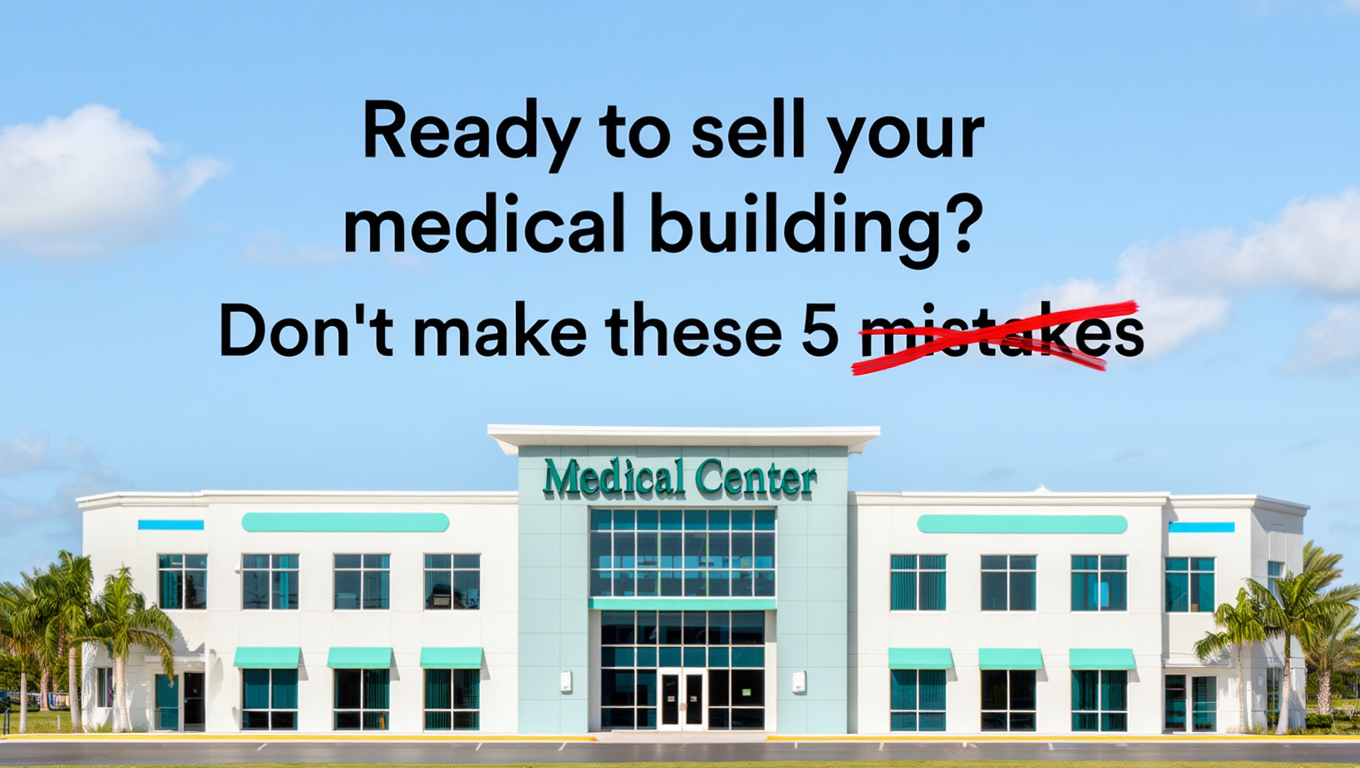
Selling a medical office building is a significant financial decision that requires careful planning and strategic execution. Whether you’re a physician looking to retire, relocate, or simply liquidate assets, avoiding common pitfalls can mean the difference between a profitable sale and leaving money on the table. Here are 5 critical mistakes to avoid when selling your medical office building.
1. Failing to Understand Your Property’s True Market Value
One of the most damaging mistakes sellers make is setting an unrealistic asking price based on emotional attachment or outdated comparables. Medical office building are unique assets with specialized features—from exam room layouts to medical gas systems—that affect valuation.
How to avoid this mistake:
- Hire a commercial real estate agent who specializes in healthcare properties
- Analyze recent sales of similar medical office buildings in your area
- Consider factors like location, tenant mix, lease terms, and building condition
- Account for deferred maintenance that could impact value
Remember, overpricing your property can cause it to sit on the market too long, ultimately forcing you to accept a lower offer than if you’d priced it correctly from the start.
2. Neglecting Critical Due Diligence Documentation
Medical office buildings come with unique compliance requirements, and buyers will scrutinize every detail. Failing to organize essential documentation can delay or even derail your sale.
Key documents to prepare:
- Current rent rolls and lease agreements
- Property tax records and operating expenses
- Environmental assessments and compliance reports
- Building permits and certificates of occupancy
- HVAC, electrical, and plumbing maintenance records
- Americans with Disabilities Act (ADA) compliance documentation
- Zoning verification and land use permits
Having these documents readily available demonstrates professionalism and builds buyer confidence, potentially shortening your timeline to close.
3. Ignoring the Importance of Timing
The medical real estate market has its own rhythms and cycles. Selling at the wrong time can significantly impact your bottom line.
Timing considerations:
- Consider tax implications and capital gains timing
- Be aware of local market conditions and healthcare industry trends
- Consider physician retirement schedules in your medical office building
If your largest tenant is a medical practice with a lease expiring in six months and they haven’t committed to renewal, securing that renewal or find a replacement tenant will strengthen your position dramatically.
4. Underestimating the Value of Professional Representation
Some sellers attempt to save on commission by selling their medical office building themselves or using a general commercial real estate agent unfamiliar with healthcare properties. This often proves to be a costly mistake.
Benefits of specialized representation:
- Access to a network of qualified healthcare real estate investors
- Understanding of medical tenant needs and lease structures
- Knowledge of healthcare-specific building codes and regulations
- Expertise in navigating complex financing arrangements
- Skilled negotiation on specialized terms unique to medical properties
A broker who specializes in medical office buildings brings buyers to the table who understand the asset class and are prepared to pay appropriate prices for well-positioned properties.
5. Overlooking Property Presentation and Curb Appeal
First impressions matter enormously in real estate, yet many sellers neglect basic improvements that could significantly boost their sale price.
Cost-effective improvements that pay dividends:
- Fresh exterior paint and updated signage
- Landscaping maintenance and parking lot repairs
- Lobby and common area updates
- Lighting upgrades for better ambiance and energy efficiency
- Deep cleaning and minor repairs throughout
- Updated marketing materials with professional photography
A well-maintained building signals to buyers that the property has been cared for, reducing concerns about hidden maintenance issues. Often, investing just 1-2% of your asking price in strategic improvements can yield a 5-10% increase in final sale value.
The Path Forward
Selling a medical office building successfully requires specialized knowledge, careful planning, and attention to detail. By avoiding these five common mistakes, you position yourself for a smoother transaction and a better financial outcome.
Take the time to properly value your property, organize your documentation, choose optimal timing, work with experienced professionals, and present your building in its best light. These steps will help ensure you maximize your return on investment while minimizing stress throughout the sales process.
If you’re considering selling your medical office building, start by consulting with healthcare real estate professionals who can provide tailored guidance based on your specific situation and market conditions, so you can avoid the 5 critical mistakes to avoid when selling your medical office building.
Let us help you find the right space, negotiate the best deal, and open your doors with confidence!
Raissa Restivo (561) 676-8814
Alex Martinez (561) 561-2280
info@medofficespaces.com
🌐 www.medofficespaces.com
📍 The Keyes Company | 21065 Powerline Road, Boca Raton, FL 33433

Join The Discussion