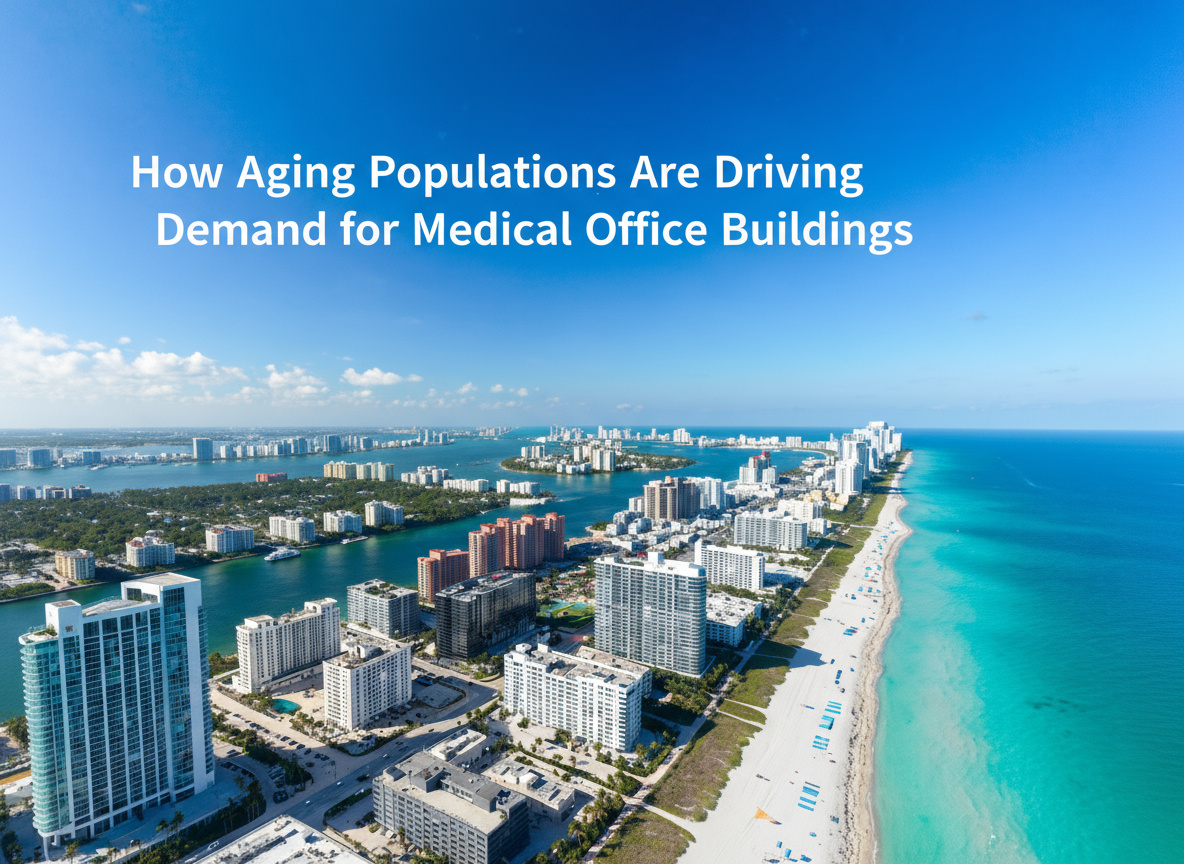
Aging populations across the globe are reshaping the healthcare landscape and creating a significant surge in demand for medical office buildings (MOBs). As life expectancy rises and Baby Boomers enter their senior years, the need for accessible, specialized, and long-term healthcare services is accelerating. For MOB investors, this demographic shift presents both challenges and major opportunities in the MOB real estate sector.
According to the United Nations, by 2030 one in six people worldwide will be 60 or older. Ultimately, this is a number expected to more than double by 2050. In the U.S., Baby Boomers will be over age 65 by 2030. Furthermore, nearly one in four Americans will be 65+ by 2060. Unfortunately, this aging cohort experiences higher rates of chronic illnesses such as diabetes, arthritis, heart disease, and dementia, and more. Thus, driving significant demand for outpatient care, primary care, rehabilitation, and specialty medical services.
MOBs are becoming the backbone of this demand. As older adults seek frequent, convenient, and specialized care, healthcare providers increasingly rely on outpatient facilities positioned closer to residential areas and retirement communities. Therefore, MOBs are evolving rapidly to support diverse and often complex care needs.
Design considerations are transforming as well. Modern MOBs now emphasize accessibility, wider hallways, user-friendly elevators, comfortable waiting areas, natural lighting, acoustic controls, and more. These enhancements improve both the patient experience and operational efficiency—factors that significantly influence long-term tenant satisfaction.
Financial opportunities for investors are substantial. MOBs typically provide stable returns, long-term leases, and resilient tenant demand. Migration of retirees to warm climates is fueling regional growth in healthcare real estate, particularly in areas close to hospitals and 55+ communities. Government programs and private insurers are also increasing support for healthcare infrastructure, further strengthening investment potential.
Ultimately, the impact of aging populations on MOB demand is profound and lasting. CRE professionals who understand these demographic trends, and who strategically invest in the development and modernization of healthcare real estate, stand to benefit from one of the most durable and expanding sectors in commercial real estate.

Join The Discussion